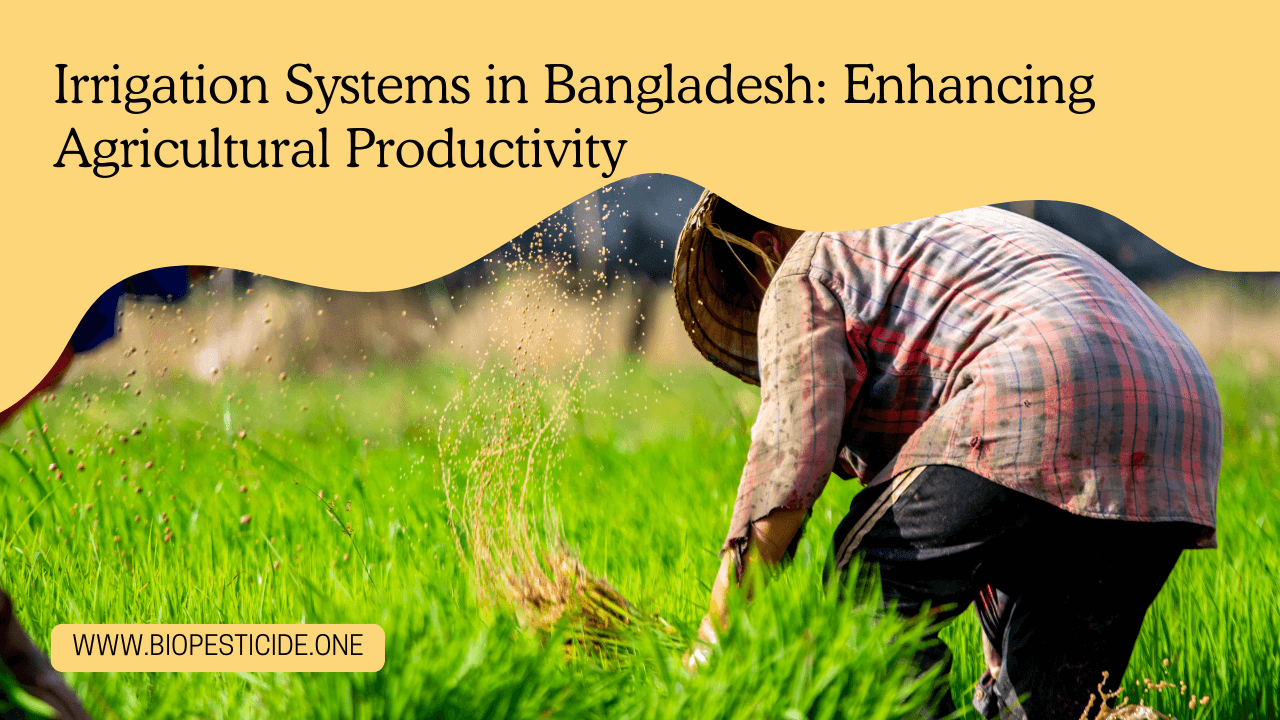
Agriculture in Bangladesh is heavily dependent on rainfall, but erratic monsoons and water scarcity during dry seasons make reliable irrigation systems essential. Efficient irrigation ensures consistent crop growth, improves yields, and reduces risk for farmers. With modern technologies, irrigation has become a critical factor in sustainable agriculture.
Importance of Irrigation in Bangladesh
-
Ensures Water Availability: Provides crops with water during dry spells and critical growth stages.
-
Boosts Crop Yield: Timely irrigation can significantly increase productivity, especially for rice, vegetables, and fruits.
-
Reduces Crop Failure Risk: Helps mitigate drought and irregular rainfall effects.
-
Supports Multiple Cropping: Enables farmers to grow more than one crop per year by ensuring sufficient water supply.
Common Irrigation Systems in Bangladesh
1. Surface Irrigation
Surface irrigation is the traditional method, where water flows over the soil to reach crops. Subtypes include:
-
Furrow Irrigation: Water flows through small channels between crop rows.
-
Flood Irrigation: Entire field is submerged in water for certain crops like rice.
Pros: Low cost, simple to implement
Cons: Water wastage, uneven distribution, labor-intensive
2. Sprinkler Irrigation
Water is sprayed over crops through nozzles, simulating rainfall. Suitable for vegetables, fruits, and high-value crops.
Pros: Even water distribution, efficient for uneven terrain
Cons: High initial investment, requires maintenance and electricity/pump
3. Drip Irrigation
Delivers water directly to the root zone of plants through tubes and emitters. Ideal for fruits, vegetables, and high-value crops.
Pros: Water-saving (up to 60%), reduces weed growth, improves fertilizer efficiency
Cons: Higher setup cost, requires skilled maintenance
4. Subsurface Irrigation
Water is delivered below the soil surface to minimize evaporation. Mostly used in experimental or high-value horticulture farms.
Pros: Minimizes evaporation, efficient water usage
Cons: Expensive, requires advanced knowledge and equipment
Challenges in Irrigation in Bangladesh
-
Water Scarcity: Some regions face seasonal water shortages and declining groundwater levels.
-
High Cost of Modern Systems: Small-scale farmers may find drip or sprinkler systems unaffordable.
-
Maintenance Issues: Pumps, pipes, and nozzles require regular upkeep.
-
Lack of Awareness: Many farmers are not trained in modern irrigation techniques.
Government Initiatives and Support
The Bangladesh government and NGOs provide support to improve irrigation efficiency:
-
Subsidies for pumps, drip, and sprinkler systems
-
Training programs on water-saving irrigation techniques
-
Construction of canals and water reservoirs for reliable supply
-
Research and promotion of sustainable water management practices
Future Outlook
With increasing climate uncertainty, the adoption of modern irrigation systems is becoming vital for Bangladesh’s agriculture. Drip and sprinkler irrigation, combined with soil moisture monitoring and automation, can significantly improve crop yields, conserve water, and support sustainable farming practices.
Conclusion:
Efficient irrigation is the backbone of modern agriculture in Bangladesh. By adopting suitable irrigation technologies, farmers can enhance productivity, reduce water wastage, and secure consistent income while promoting sustainable farming practices.
Hashtags:
#IrrigationSystems #BangladeshAgriculture #DripIrrigation #SprinklerIrrigation #WaterManagement
Suggested Backlinks:
-
Link to Bangladesh Department of Agricultural Extension (DAE)
-
Links to irrigation equipment suppliers in Bangladesh
-
Government water management and training programs