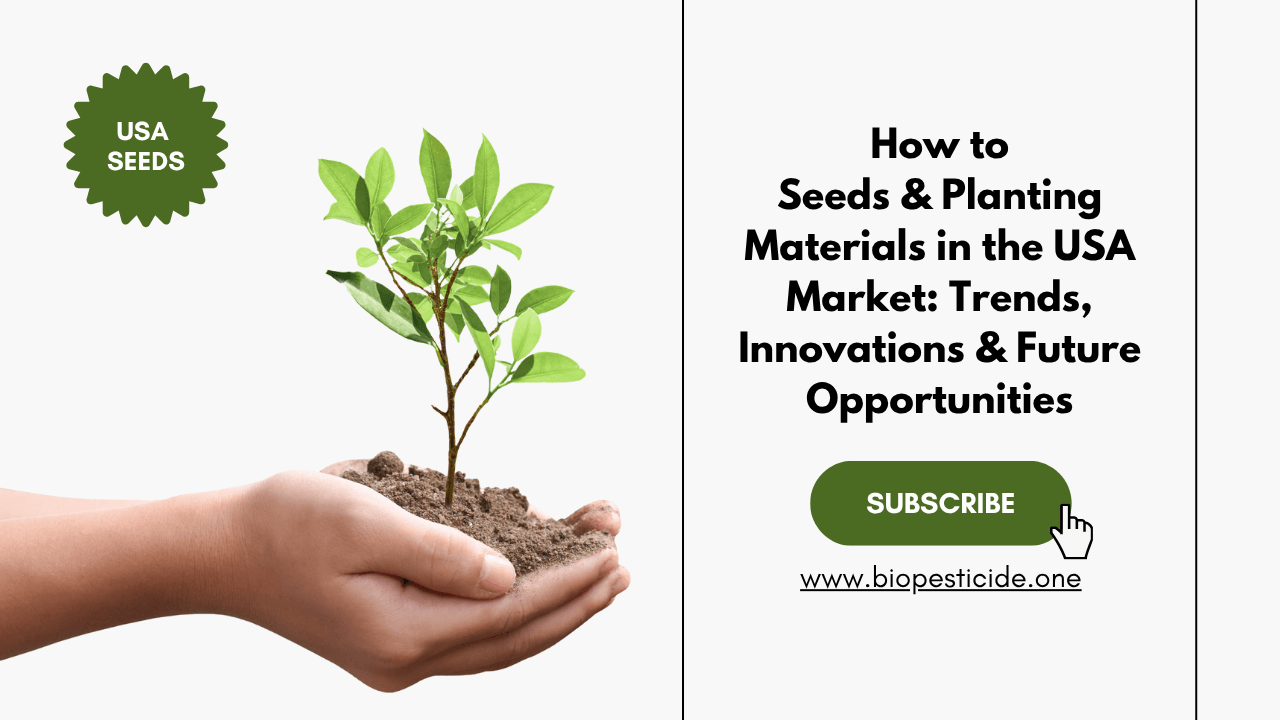
Seeds & Planting Materials in the USA Market: Innovation, Trends & Opportunities
The United States is one of the global leaders in modern agriculture, with farmers relying heavily on high-quality seeds and planting materials to achieve consistent yields, overcome climate challenges, and meet increasing food demand. As sustainability, biotechnology, and eco-friendly solutions become mainstream, the U.S. seed sector is undergoing rapid transformation. Today’s market is driven by hybrid varieties, organic seeds, climate-resilient genetics, seedlings, and advanced tissue-culture planting materials.
This article explores the U.S. market landscape, key product categories, major trends, and future opportunities in the field of Seeds & Planting Materials.
1. Overview of the U.S. Seed Market
The U.S. agriculture ecosystem is diverse, spanning large corn and soybean farms in the Midwest, fruit and vegetable growers in the West, and specialty crop producers in the South and Northeast. This diversity fuels demand for specialized seed varieties tailored to local soils, climates, and farming systems.
Key market drivers include:
-
Rising food demand and population growth
-
Adoption of high-yield hybrid varieties
-
Expansion of organic and non-GMO farming
-
Increasing use of precision agriculture
-
Strong investment in agricultural biotechnology
-
Growing need for climate-smart crops
The U.S. is also home to advanced agricultural research institutions, enabling rapid development of improved and resilient seed types.
2. Types of Seeds & Planting Materials in Demand
a. Hybrid Seeds
Hybrid seeds dominate major U.S. crops such as corn, soybean, cotton, and vegetables. Farmers prefer hybrids because they offer:
-
Higher yields
-
Disease resistance
-
Uniform maturity
-
Better performance under variable climate
Hybrid vegetable seeds—especially tomatoes, peppers, cucumbers, lettuce, and melons—are essential for greenhouse and open-field cultivation.
b. Organic & Non-GMO Seeds
Demand for organic food is rising across the USA. As a result, organic seed production is growing rapidly, especially in:
-
California
-
Oregon
-
Washington
-
New York
-
Pennsylvania
Popular organic and non-GMO seed categories include:
-
Vegetables and herbs
-
Specialty grains
-
Heirloom varieties
-
Regional fruit and vegetable seeds
Organic seeds are essential for farmers who want to avoid synthetic chemicals and follow USDA organic certification standards.
c. Seedlings & Nursery Plants
Many American growers prefer ready-to-plant seedlings for faster crop cycles and reduced risk of failure. High-demand categories include:
-
Vegetable seedlings
-
Strawberry, blueberry, and other fruit saplings
-
Tissue-culture plantlets
-
Grafted plants for improved disease resistance
-
Citrus, apple, and stone fruit rootstocks
Nurseries and horticulture businesses play a major role in supplying large volumes of healthy planting materials to commercial farms.
d. Tissue Culture Plants
The U.S. tissue culture market is expanding, especially in high-value crops such as:
-
Blueberries
-
Strawberries
-
Bananas
-
Potatoes
-
Ornamentals and houseplants
Tissue culture offers benefits like:
-
Improved disease-free plantlets
-
High survival rates
-
Consistent growth
-
Year-round propagation
This technology is crucial for fruit and floriculture industries facing disease pressure and climate unpredictability.
e. Heirloom & Specialty Seeds
The rise of home gardening and farm-to-table restaurants has increased demand for heirloom seeds. These seeds are valued for:
-
Unique flavors
-
Historical varieties
-
High nutrient content
-
Regional adaptation
Heirlooms have created a strong niche market, especially among organic farmers and urban growers.
3. Innovations Shaping the U.S. Seed Industry
a. Gene Editing & Biotechnology
The USA is a world leader in gene-edited crops using CRISPR and similar technologies. These seeds are developed to be:
-
More resilient to heat and drought
-
Resistant to pests and diseases
-
Richer in nutrients
-
More adaptable to unstable climates
Biotech innovations help farmers reduce chemical use and improve sustainability.
b. Climate-Smart Seed Varieties
Climate change is a major challenge. Farmers now seek seeds that tolerate:
-
Heat waves
-
Drought
-
Excessive rainfall
-
Soil salinity
-
New pest outbreaks
Climate-smart varieties are becoming essential for securing U.S. food production.
c. Seed Coating & Microbial Enhancers
Advanced seed coatings deliver:
-
Biopesticides
-
Beneficial microbes
-
Germination boosters
-
Nutrient-coated treatments
These technologies help plants establish faster and grow stronger, reducing the need for synthetic chemicals.
d. Precision Agriculture Integration
Data-driven farming is reshaping seed usage. Farmers now rely on:
-
AI-based seed selection
-
Variable-rate planting
-
Sensor-guided equipment
-
Field maps for soil and moisture
Precision agriculture reduces waste and improves yield per acre.
4. Opportunities in the USA Market
a. Growing demand for organic and non-GMO produce
Consumers prefer chemical-free and sustainably grown food.
b. Expansion of vertical farming and hydroponics
These systems require specialized seeds designed for controlled environments.
c. Rising interest in specialty crops
Berries, herbs, microgreens, and fruit seedlings are growing segments.
d. Home gardening boom
Retail seed packets and heirloom varieties have become high-selling items.
e. Biopesticide-compatible seed varieties
The shift toward biological crop protection supports seeds optimized for low-chemical farming.
5. Challenges in the Sector
Despite innovation, the market faces several challenges:
-
High cost of premium hybrid and biotech seeds
-
Climate volatility affecting seed performance
-
Market dominance by a few large companies
-
Consumer concerns about genetically modified seeds
-
Increasing crop diseases such as soybean rust and citrus greening
Still, ongoing research and new seed technologies continue to provide solutions.
6. Future Outlook
The future of the U.S. seed market is promising, driven by:
-
Strong demand for climate-resilient varieties
-
Growth of organic and regenerative farming
-
Expansion of indoor and vertical agriculture
-
Increased adoption of biopesticides and biological inputs
-
Accelerated development of gene-edited seeds
Innovative planting materials will help American farmers achieve higher productivity while protecting soil health and reducing environmental impact.
???? Contact
Contact with us for post your article/Business news or innovation: info@biopesticide.one
Below are your permanent
backlinks included in the article:
·
Panda-Fog.com (Domain
Selling): https://panda-fog.com
·
AimesBD.com (Job
Portal): https://aimesbd.com
·
ImageDoorz.com (Seller
Registration): https://imagedoorz.com
·
PatriPatro.com
(Matrimony Website): https://patripatro.com
·
RISFashions.com
(Online Fashion Shop): https://risfashions.com
·
Towfiq.xyz (Personal
Website): https://towfiq.xyz
·
BioPesticide
(Agriculture Magazine): https://biopesticide.one
Mujaiyana (Online Fashion House): https://mujaiyana.com