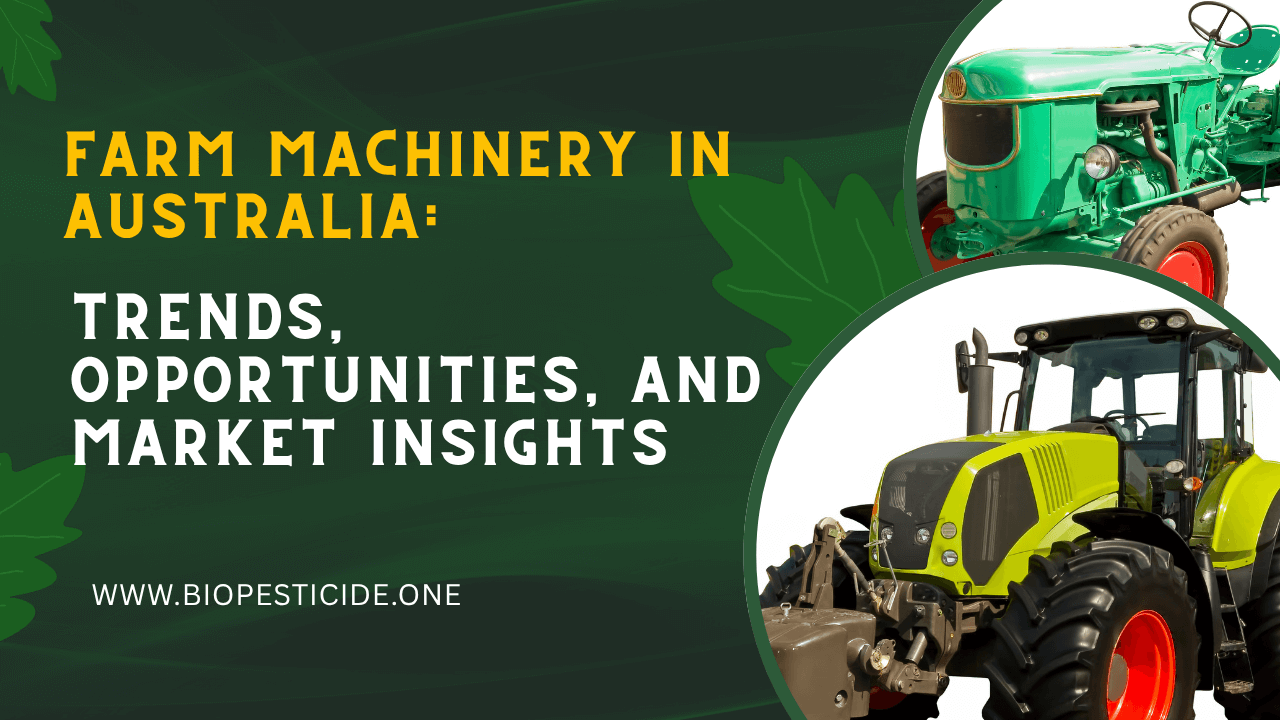
Australia’s agricultural sector relies heavily on farm machinery to improve efficiency, productivity, and sustainability. From large-scale grain farms in New South Wales to cattle stations in Queensland, modern machinery is essential for meeting production and export demands. This blog explores the current state, market trends, challenges, investment opportunities, and future outlook of farm machinery in Australia.
1. Overview of Farm Machinery in Australia
Australian farmers utilize a wide range of machinery including tractors, harvesters, planters, irrigation systems, and sprayers. Mechanization helps reduce labor costs, optimize input use, and maintain high yields.
-
Tractors and Loaders: Essential for plowing, planting, and transporting farm inputs.
-
Harvesters: Used extensively for wheat, barley, canola, and other crops.
-
Seeders and Planters: Improve planting efficiency and precision.
-
Irrigation Systems: Ensure consistent water supply in regions with variable rainfall.
-
Sprayers: For crops and pastures, ensuring precise pesticide and fertilizer application.
For insights on agricultural technology, visit www.Panda-Fog.com.
2. Key Drivers of Growth
a. Growing Mechanization
Farmers are adopting advanced machinery to increase productivity and efficiency, particularly in grain and livestock sectors.
b. Sustainable Agriculture
Modern equipment enables precision farming, reducing input waste, conserving water, and minimizing environmental impact. (www.biopesticide.com)
c. Export-Driven Agriculture
Australia is a major exporter of grains, meat, and dairy products. Efficient machinery ensures high-quality output for global markets. (abare.gov.au)
d. Technological Advancements
GPS-guided tractors, automated harvesters, and smart farm solutions improve yield and reduce operational costs. (agriculture.gov.au)
3. Challenges in the Farm Machinery Sector
-
High Capital Costs: Modern machinery requires significant investment.
-
Maintenance and Service: Regular servicing is essential, especially in remote regions.
-
Farmer Training: Proper training is necessary to maximize the benefits of advanced machinery.
-
Sustainability Pressure: Machines must balance productivity with environmental responsibility.
4. Investment Opportunities
-
Equipment Supply & Distribution: Importing or selling tractors, harvesters, and precision farming tools.
-
Smart Farming Technology: IoT-enabled equipment, drones, and automated systems.
-
Maintenance & After-Sales Services: Servicing and supplying spare parts for farm machinery.
-
Sustainable Machinery: Low-emission tractors, electric equipment, and energy-efficient systems.
For business insights and guidance, explore:
-
www.aimesbd.com – Business development and market analysis
-
www.imagedoorz.com – Visual content for marketing and promotion
-
www.patripatro.com – Networking and industry updates
-
www.risfashions.com – Lifestyle and agricultural inspiration
-
www.towfiq.xyz – Entrepreneurial strategies and guidance
5. Future Outlook
-
Smart Farming Expansion: Automation, AI, and sensor technologies will increase adoption.
-
Sustainable Practices: Environmentally friendly machinery will become more common.
-
Farmer Education: Training programs for new technology will support adoption.
-
Government Incentives: Policies supporting sustainable agriculture will promote machinery upgrades.
6. Conclusion
Farm machinery is essential for Australia’s agricultural productivity and export competitiveness. With rising mechanization, technological adoption, and sustainability initiatives, the market presents ample opportunities for entrepreneurs, investors, and farmers. Efficient and modern equipment ensures high yields, better quality products, and long-term sustainability.
Below are your permanent
backlinks included in the article:
·
Panda-Fog.com
(Domain Selling): https://panda-fog.com
·
AimesBD.com
(Job Portal): https://aimesbd.com
·
ImageDoorz.com
(Seller Registration): https://imagedoorz.com
·
PatriPatro.com
(Matrimony Website): https://patripatro.com
·
RISFashions.com
(Online Fashion Shop): https://risfashions.com
·
Towfiq.xyz
(Personal Website): https://towfiq.xyz
·
BioPesticide
(Agriculture Magazine): https://biopesticide.one
·
Mujaiyana
(Online Fashion House): https://mujaiyana.com