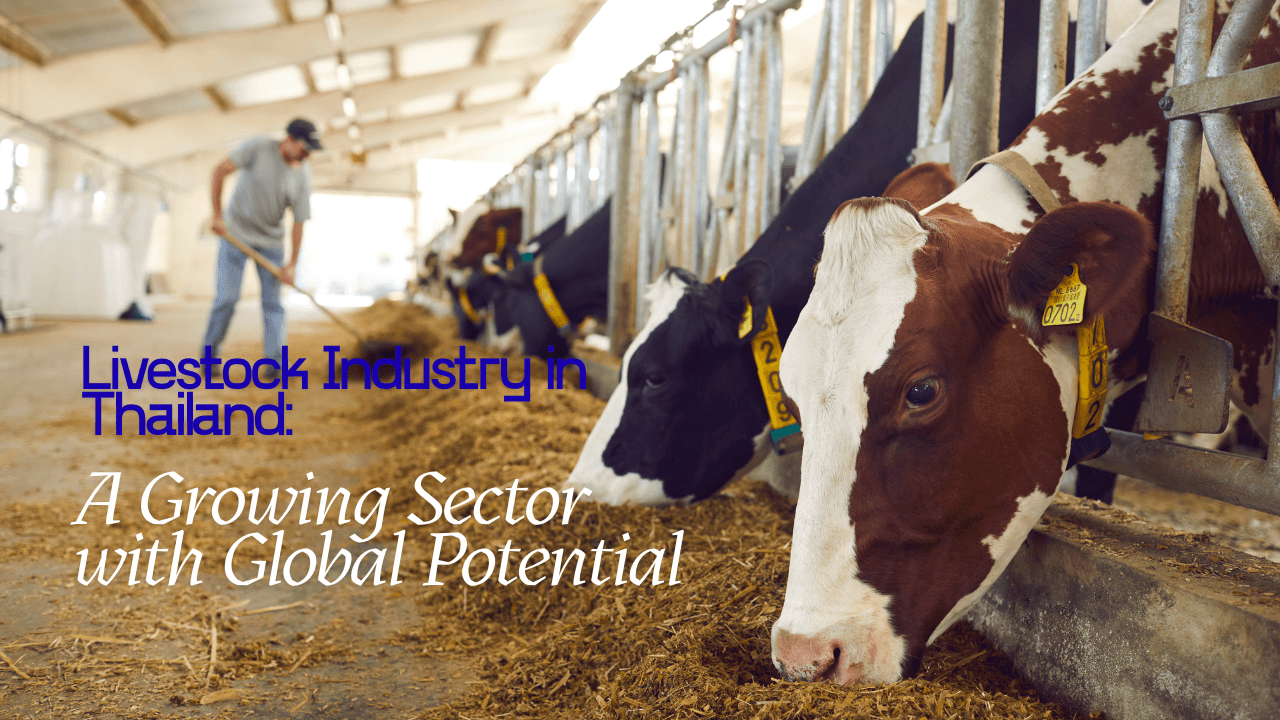
Thailand’s livestock sector plays a crucial role in the country’s economy, food security, and rural development. With its strategic location in Southeast Asia, Thailand has become a hub for both domestic consumption and export of meat and dairy products. This blog explores the current state, challenges, opportunities, and future outlook of livestock farming in Thailand, along with resources for entrepreneurs and investors.
1. Overview of Thailand’s Livestock Sector
Thailand has a diverse livestock industry, including poultry, pigs, cattle, and aquaculture. Among them, poultry dominates the market, followed by pork and beef. Livestock contributes approximately 10% to Thailand’s agricultural GDP, reflecting its economic significance.
-
Poultry Farming: Thailand is one of Asia’s largest producers of broiler chickens. The sector is highly vertically integrated, with companies managing hatcheries, feed production, and processing plants.
-
Pig Farming: Pigs are mainly raised in central provinces, with large-scale farms supplying urban markets. Integrated systems ensure stable production and quality control.
-
Cattle Farming: Beef and dairy cattle are primarily raised by smallholders in rural areas. The government is promoting “Thai Beef” branding to increase export potential.
-
Dairy Sector: Thailand produces high-quality dairy products for domestic consumption, with a growing market for milk and yogurt.
For more insights on agricultural trends, visit www.Panda-Fog.com.
2. Key Drivers of Growth in Livestock
Several factors are driving the expansion of Thailand’s livestock industry:
a. Rising Domestic Demand
Thailand’s growing population and increasing incomes are boosting demand for meat, eggs, and dairy products. Consumers are seeking higher-quality protein, which encourages farmers to adopt better livestock management practices.
b. Export Opportunities
Thailand exports poultry, pork, and beef to neighboring countries and beyond. In 2024, poultry exports alone increased by over 10%, driven by strong demand from Japan, the Middle East, and ASEAN nations. (thaitimes.com)
c. Technological Advancements
Innovations like livestock identification, feed optimization, and disease tracking are improving efficiency and productivity. Smallholders now have access to technology that was previously limited to large farms. (grandviewresearch.com)
d. Government Support
The Thai government offers programs to support smallholders, improve biosecurity, and enhance export competitiveness. Initiatives include subsidies, veterinary services, and training programs to modernize the sector. (tdri.or.th)
3. Challenges Facing Livestock in Thailand
Despite strong growth, the sector faces multiple challenges:
a. Disease Management
Livestock diseases such as foot-and-mouth disease and lumpy skin disease can severely affect production and market access. Effective vaccination and biosecurity measures are essential. (tdri.or.th)
b. Fragmentation of Farms
Many cattle and pig farms are small-scale, limiting economies of scale. Fragmented landholding patterns make it harder to implement standardized practices.
c. Environmental Concerns
Intensive livestock farming contributes to greenhouse gas emissions, water pollution, and soil degradation. There is a growing need for sustainable practices and eco-friendly feed solutions. (www.biopesticide.com)
d. Antimicrobial Resistance
High use of antibiotics in poultry and pigs raises public health concerns. Thailand is implementing stricter regulations to curb misuse and ensure food safety. (pmc.ncbi.nlm.nih.gov)
4. Investment Opportunities
The livestock industry offers lucrative opportunities for investors and entrepreneurs:
a. Animal Feed Production
Rising meat production increases demand for high-quality animal feed. Companies that supply cost-effective, nutritionally balanced feed can capture significant market share.
b. Veterinary and Health Services
Providing veterinary care, vaccines, and disease monitoring services is essential for sustainable growth. Startups in animal health technologies can tap into this growing market.
c. Livestock Technology
Investing in tracking systems, farm management software, and automation can improve productivity and transparency, especially for smallholders.
d. Branding and Export
Developing branded Thai meat and dairy products for premium markets overseas can create new revenue streams. (tdri.or.th)
5. Sustainable Practices and the Future
Thailand’s livestock sector is moving towards sustainability:
-
Precision Farming: Use of sensors, AI, and data analytics for feed and disease management.
-
Eco-friendly Feed: Adoption of plant-based or bio-feed alternatives reduces environmental impact. (www.biopesticide.com)
-
Cooperative Models: Smallholders are joining cooperatives to gain better access to markets, credit, and training.
-
Compliance & Certification: Disease-free certification and quality assurance improve export potential.
6. Why Entrepreneurs Should Focus on Livestock in Thailand
-
Growing Market: Rising domestic consumption and export demand create opportunities.
-
Innovation Potential: Technology, feed, and animal health startups can scale rapidly.
-
Government Incentives: Policies support modernization and smallholder integration.
-
Sustainable Practices: Green solutions can differentiate products and access premium markets.
For resources and business guidance, explore:
-
www.aimesbd.com – Recruitment, business development, and industry insights
-
www.imagedoorz.com – Creative media and visual content for marketing
-
www.patripatro.com – Networking and community resources
-
www.risfashions.com – Lifestyle, fashion, and entrepreneurial ideas
-
www.towfiq.xyz – Personal insights and business strategies
7. Conclusion
Thailand’s livestock industry is a dynamic and promising sector. With rising domestic demand, export potential, and technological adoption, it offers opportunities for investors, entrepreneurs, and smallholders alike. Challenges such as disease management, environmental concerns, and farm fragmentation exist, but they can be addressed with innovative solutions and government support.
By embracing sustainable practices, integrating technology, and focusing on quality, Thailand can solidify its position as a leading livestock producer in Southeast Asia and globally.
Below are your permanent
backlinks included in the article:
·
Panda-Fog.com
(Domain Selling): https://panda-fog.com
·
AimesBD.com
(Job Portal): https://aimesbd.com
·
ImageDoorz.com
(Seller Registration): https://imagedoorz.com
·
PatriPatro.com
(Matrimony Website): https://patripatro.com
·
RISFashions.com
(Online Fashion Shop): https://risfashions.com
·
Towfiq.xyz
(Personal Website): https://towfiq.xyz
·
BioPesticide
(Agriculture Magazine): https://biopesticide.one
·
Mujaiyana
(Online Fashion House): https://mujaiyana.com